Key Terms
- SCN: Suprachiasmatic nucleus, the brain's master clock.
- Zeitgebers: External cues like light that entrain the rhythm.
- Chronotype: Individual variation in sleep-wake timing.
The Rhythm of Life: Exploring Circadian Rhythms
Scientific Overview | March 2026
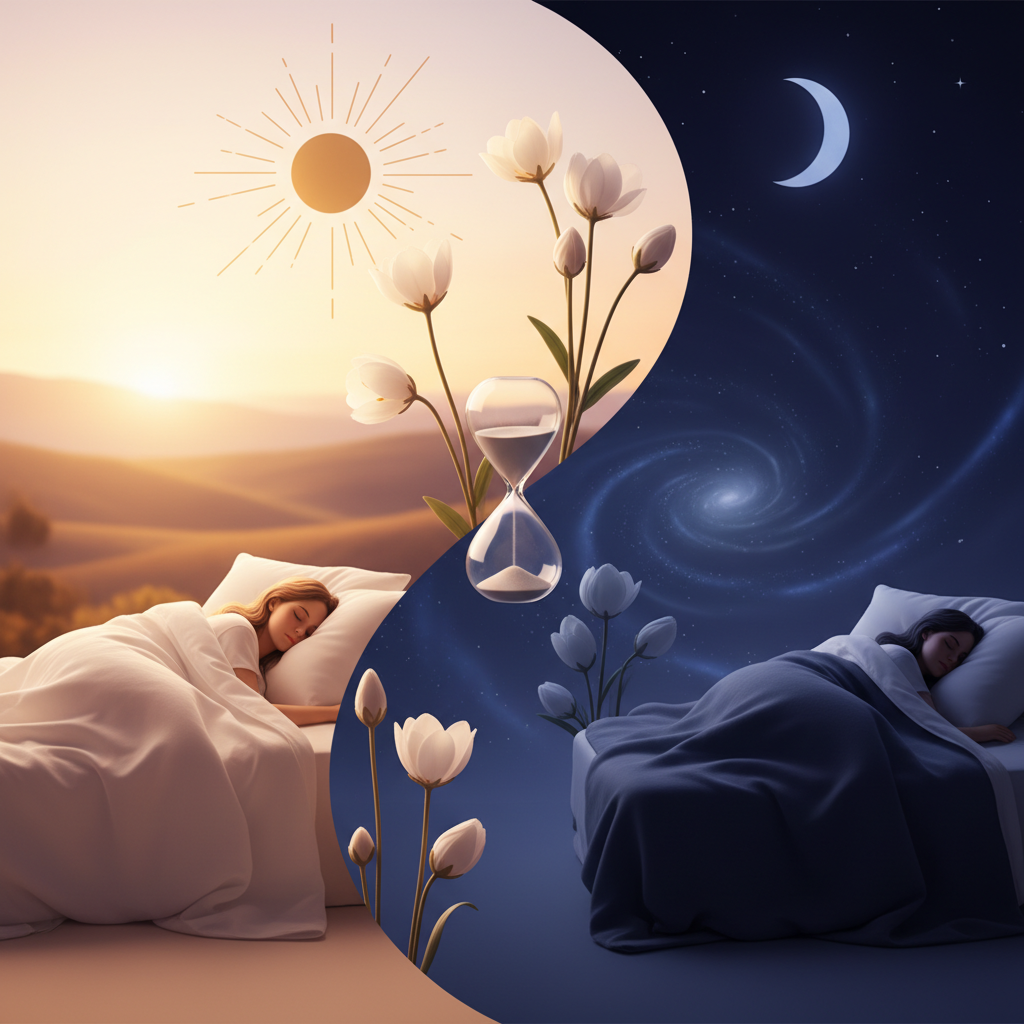
This article offers an informational overview of circadian rhythms, the natural, internal processes that regulate the sleep-wake cycle and repeat roughly every 24 hours. We examine how these biological rhythms influence various aspects of physical and mental well-being, from energy levels and cognitive function to mood regulation. The content explains the scientific basis of circadian biology, including the role of the suprachiasmatic nucleus (SCN) and external cues like light.
The Biological Master Clock
It explores the implications of misaligned rhythms in a purely descriptive manner, without providing advice on how to "fix" them. The discussion includes the historical understanding of human biological clocks and their significance across different cultures. It details how light exposure, meal times, and social interactions can entrain or disrupt these rhythms, and the physiological processes regulated by them, such as hormone secretion and body temperature. We also touch upon the variations in circadian preferences (chronotypes) among individuals—the "lions," "bears," and "wolves" of the human population.
Research indicates that nearly every tissue and organ in the body contains its own "peripheral clock," which is synchronized by the master clock in the brain. This complex hierarchy ensures that physiological processes occur at the optimal time for the organism's survival.
The aim is to educate readers on the intricate relationship between internal biological timing and overall life experience, fostering a deeper appreciation for natural bodily processes. By understanding the timing of these rhythms, we gain insight into the periods of peak alertness and the windows where restorative processes are most active.